Topic: Cyclone Nargis


Cyclone Nargis (JTWC designation: 01B, also known as Very Severe Cyclonic Storm Nargis), was a strong tropical cyclone that caused the worst natural disaster in the recorded history of Myanmar. The cyclone made landfall in the country on May 2, 2008, causing catastrophic destruction and at least 138,000 fatalities. The Labutta Township alone was reported to have 80,000 dead, with about 10,000 more deaths in Bogale. There were around 55,000 people missing and many other deaths were found in other towns and areas, although the Burmese government's official death toll may have been underreported, and there have been allegations that they stopped updating the death-toll after 138,000 to minimize political fallout. The feared 'second wave' of fatalities from disease and lack of relief efforts never materialized. Damage was estimated at over US$10 billion, which made it the most damaging cyclone ever recorded in this basin.
Nargis is the deadliest named cyclone in the North Indian Ocean Basin, as well as the second deadliest named cyclone of all time, behind Typhoon Nina of 1975. Including unnamed storms like the 1970 Bhola cyclone, Nargis is the 8th deadliest cyclone of all time, but an uncertainty between the deaths caused by Nargis and those caused by other cyclones (like the 1991 Bangladesh cyclone), could put Nargis as 7th deadliest or higher, because the exact death toll is uncertain. Nargis was the first tropical cyclone to strike the country since Cyclone Mala made landfall in 2006, which was slightly stronger, but had a significantly lower impact. According to various reports, Indian authorities had warned Burma about the danger that Cyclone Nargis posed 48 hours before it hit the country's coast.
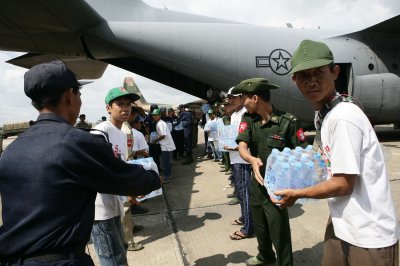
Relief efforts were slowed for political reasons as Burma's military rulers initially resisted large-scale international aid. U.S. President George W. Bush said that an angry world should condemn the way Burma's military rulers were handling the aftermath of such a catastrophic cyclone. Burma's military junta finally accepted aid a few days after India's request was accepted. Continued hampering of relief efforts was the fact that only ten days after the cyclone nearby central China was hit by a massive earthquake, known as the Sichuan earthquake which measured 7.9 in magnitude and it alone had taken 87,476 lives, and caused 85 billion dollars in damage (USD), making it the costliest disaster in Chinese history and third costliest disaster ever known. Furthermore, some donated aid items were found to be available in the country's black market, and Myanmar's junta warned on May 15 that legal action would be taken against people who traded or hoarded international aid.
It uses material from the Wikipedia article "Cyclone Nargis."