Top News
U.S. News
World News
Featured
Odd News
Entertainment
Movies
Music
TV
Science
Health
Sports
NFL
MLB
NBA
Soccer
Voices
Photos
News
US News
World News
Entertainment
Sports
Archive
Almanac
Trending
Antarctica volcano
Fake electors
'Masked Singer'
North Korea
Odd goats
'Workforce hubs'
Harvey Weinstein
Student debt
Pool run
Advertisement
More than 100 pro-Palestinian protesters arrested at Emerson as encampments rile universities
NFL Draft 2024: Caleb Williams, trades highlight offense-heavy first round
Democrats urge DEA to end delay, 'swiftly' reclassify status of marijuana
Crew of first Boeing Starliner mission arrives at Kennedy Space Center
Russell Crowe in throes of possession in 'The Exorcism' trailer
Top Stories
Featured News
'The Veil' fight scenes, accent challenged Elisabeth Moss
North Korea tests rocket launcher system in threat to Seoul and possible show for Russia
Chinese dissident denied asylum fights to stay in South Korea
U.S. News
U.S. troops begin construction of Gaza pier as famine looms
Chinese nationals charged with conspiring to illegally export U.S. tech to China
For real: The Onion is sold
World News
Denmark increases military aid to Ukraine by $633 million
Haitian Prime Minister Ariel Henry resigns
Australian authorities charge 5 teens in connection with church stabbings
Entertainment News
Famous birthdays for April 26: Channing Tatum, Jordana Brewster
Antonia Gentry, Julia Lester scramble to find 'Prom Dates'
Clippers owner Donald Sterling racist comments resurface in 'Clipped' trailer
Odd News
Maryland woman wins $50,000 after boyfriend urges her to buy lottery ticket
Nigerian woman interviews 90 people in 55 hours for world record
Active volcano in Antarctica spews tiny crystals of gold worth $6,000 a day
Health News
U.S. births fall in 2023 to lowest number since 1979
Emulsifiers in processed foods may increase risk of diabetes
Gene variants linked to pesticide exposure may increase risk of Parkinson's
Science News
NASA seeks help from private companies for expensive Mars Sample Return mission
China to launch 3 astronauts to Tiangong space station as Beijing's lunar plans progress
Japan's SLIM survives 3rd lunar night, surprising designers
On this Day
On This Day: 16 killed in German school shooting
UPI Archives: Gunman had history of trouble
UPI Archives: German school reopens after 2002 massacre
Sports News
NFL Draft 2024: Chiefs trade with Bills to land WR Xavier Worthy
New Cardinals WR Marvin Harrison Jr. eyes Larry Fitzgerald-like career
Vikings complete draft-day trade for ex-Michigan quarterback J.J. McCarthy
Photos
Carp streamers cover Tokyo Tower and Skytree in Japan
NASA astronauts arrive for Starliner mission
MLB: St. Louis Cardinals dominate Arizona Diamondbacks
This week in Washington
View All Photo Collections
Latest Headlines
U.S. News // 5 hours ago
Secret Service agent removed from VP Harris' detail after 'distressing behavior'
April 25 (UPI) -- The U.S. Secret Service has dismissed an agent assigned to Vice President Kamala Harris after showing "distressing behavior," a spokesperson said Thursday.
U.S. News // 6 hours ago
Kardashian, VP Harris discuss criminal justice reform
April 25 (UPI) -- Reality TV star turned businesswoman Kim Kardashian joined Vice President Kamala Harris at the White House on Thursday to discuss strategies for criminal justice reform.
U.S. News // 8 hours ago
National Guardsman who was FBI manhunt suspect pleads guilty in January 6 riot
April 25 (UPI) -- A National Guardsman who launched an FBI manhunt following the Jan. 6, 2021, attack on the U.S. Capitol pleaded guilty Thursday during a hearing in Washington, D.C.
U.S. News // 8 hours ago
Mike Pinder, keyboardist co-founder of Moody Blues, dies at 82
April 25 (UPI) -- Mike Pinder, keyboardist, vocalist and founding member of the Moody Blues, died Wednesday at his home in Northern California. He was 82.
U.S. News // 9 hours ago
USC cancels graduation ceremony amid Gaza protests
April 25 (UPI) -- The University of Southern California on Thursday canceled its main graduation ceremony amid pro-Palestinian protests on campus.
U.S. News // 10 hours ago
Amid poor first-quarter financial results, Southwest ends service in 4 cities
April 25 (UPI) -- A first-quarter financial loss has prompted Southwest Airlines to suspend service to four cities, the carrier announced Thursday.
U.S. News // 10 hours ago
Man sentenced to 25 years in fatal shooting of Saints star Will Smith in 2016
April 25 (UPI) -- Cardell Hayes, who was convicted in January of killing New Orleans Saints defensive end Will Smith, was sentenced Thursday to 25 years in prison for manslaughter.
U.S. News // 12 hours ago
Supreme Court weighs Trump's immunity claims in election interference case
April 25 (UPI) -- The U.S. Supreme Court on Thursday heard oral arguments on former President Donald Trump's claims of presidential immunity from the election interference case against him.
U.S. News // 13 hours ago
FCC restores net neutrality in effort to make Internet faster, more equitable
April 25 (UPI) -- Net neutrality rules were re-established Thursday by the Federal Communications Commission on a 3-2 party line vote in a win for Democrats.
U.S. News // 13 hours ago
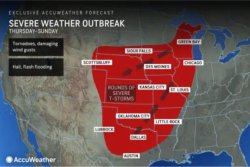
Weekend severe weather outbreak threatens central U.S.
A multiple-day severe weather outbreak packing powerful wind gusts, tornadoes, large hail and flash flooding will pose a significant risk to lives and property in the middle of the United States into Sunday.
Load More
Advertisement
Most Popular
Weekend severe weather outbreak threatens central U.S.
Top News // 13 hours ago
Amid poor first-quarter financial results, Southwest ends service in 4 cities
Top News // 10 hours ago
Judge upholds $83M E. Jean Carroll defamation award against Donald Trump
Top News // 13 hours ago
U. of Pennsylvania scientists forecast highly active Atlantic hurricane season
Top News // 14 hours ago
Democrats urge DEA to end delay, 'swiftly' reclassify status of marijuana
Top News // 8 hours ago
Advertisement
Podcasts
Advertisement
TV
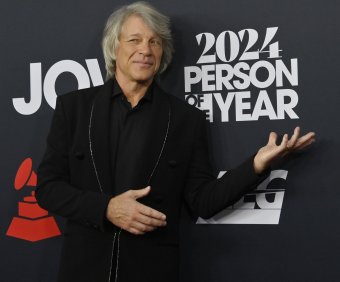
Jon Bon Jovi: 'It's been a life well spent' and 'a work in progress'
LOS ANGELES, April 24 (UPI) -- Jon Bon Jovi discusses the Hulu docuseries "Thank You, Goodnight: The Bon Jovi Story,' premiering Friday on Hulu and documenting the band's 40 year career.
Voices
Large retailers have harmful environmental impacts, few regulations
Advertisement